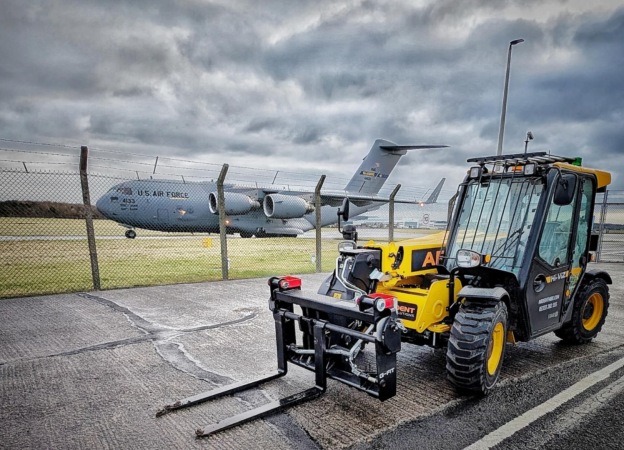
The best telehandler isn't the biggest or the newest. It's the one that's correctly specified for the job. Over-spec and you waste money on features you'll never use. Under-spec and you lose time, take risks and call in extra kit. This guide is a practical checklist you can run before every order so your spec pays back on day one.
Start with the job, not the brochure
Write down three numbers: maximum lift weight, maximum lift height, and maximum radius. Add the attachment you'll use for most lifts. Those four decisions narrow the field fast. If you can't hit your numbers with a healthy margin, you either need a different model or to rethink the plan. Resist the temptation to "make do" - that's where bent forks, slow cycles and risky workarounds creep in.
Engine and emissions: quiet workhorses matter
Modern Stage V engines bring two advantages that rarely make the spec sheet headlines: cleaner exhaust and better low-end control. Cleaner exhaust means happier neighbours and fewer complaints on urban jobs. Better control means smoother inching in tight spaces. Neither is glamorous. Both save time and stress.
Vision and awareness: see more, move better
Good vision is productivity. Specify clean sightlines, decent mirrors and camera options that suit the task. A well-placed camera can pay back in a single shift by avoiding a near-miss or a clumsy reposition. If the site is congested or has mixed traffic, consider proximity aids that warn the operator early without drowning them in noise.
Safety interlocks that help, not hinder
Set safety up to support good work. Green seatbelt isolation, clear mode indicators and sensible speed control reduce risk without tripping operators over. The key is calibration: aggressive interlocks that halt the job at every nudge create workarounds. Calibrated correctly, they back operators up when it matters and stay out of the way when it doesn't.
Tyres and ground contact: where confidence starts
Tyres are not an afterthought. Pick tread and ply for the surface you'll actually run on-mud, recycled aggregate, concrete, or a mix. Correct pressures and a quick daily check transform stability and steering response, especially with heavy picks at radius. If your workface changes daily, plan for opportunistic checks at lunch as temperatures shift.
Attachments: the hidden multiplier
Attachments turn a good base machine into the right tool:
- Rotating fork carriage for accurate placement on congested facades.
- Jib or winch when you need crane-style picks without bringing in extra kit.
- Buckets, sweepers and hooks for the site housekeeping that keeps everything moving.
Choose the attachments you'll use this week and next, not just today. That's where the payback lives.
Control and comfort: small details, big day
Cab ergonomics, intuitive joysticks, air-con or heating for summer/winter starts, and balanced ventilation - all the things that seem "nice to have" - reduce fatigue and errors. A comfortable operator is a more precise operator. You'll feel it in fewer knocks, cleaner approaches and better end-of-day productivity.
Access and serviceability: protect your uptime
Ask one question: can a daily check be done in under five minutes without contortions? If the answer is no, pick a different spec. Clear access to filters, dipsticks, fill points and batteries means issues get spotted early. Add a simple self-help routine for common items - DPF regen, water-in-fuel, warning lamps - and you'll prevent half your callouts.
Telematics and alerts: data that drives action
Switch on the basics: utilisation, idling and safety alerts that supervisors will actually use. Daily and weekly snapshots are enough. The goal is simple: spot under-used kit you can off-hire, highlight machines that need coaching, and confirm that safety-critical behaviours are trending in the right direction.
Your pre-order checklist
- Confirm lift, height, radius and primary attachment.
- Match model and tyres to ground conditions and travel distances.
- Specify visibility aids that suit the site layout.
- Enable seatbelt isolation and speed control (removing 4th gear) at calibrated settings.
- Add the attachments you'll need over the entire hire, not just day one.
- Ensure daily checks are quick and fully accessible.
- Turn on utilisation, idling and safety alerts with a weekly review slot.
A realistic payback
On typical programmes, a well-spec'd telehandler saves money in three ways: fewer repositions and faster cycles, fewer near-misses and damage incidents, and fewer days lost to preventable faults. None of that shows up on the invoice. All of it shows up in the programme.
The bottom line
Spec is strategy. Get it right and you lift more, safer, with fewer surprises - while spending less over the hire. Get it wrong and you pay for it in delays, rework and double-handling. Use the checklist, stick to the numbers, and let the machine earn its keep from the first lift.


 Anuj Patel