
From Alerts to Analytics: Five Monday Morning Reports That Move the Dial
Dashboards don't change outcomes - decisions do. The trick is focusing on a handful of reports that tell you what to fix this week. Here are the five Site Manager views that site teams actually use every Monday, plus how to turn each one into a concrete action in under ten minutes.
Report 1: Utilisation heatmap
- What it shows: when each machine is genuinely productive versus parked or travelling.
- Why it matters: under-used kit drags budgets and clutters compounds.
- What to do: identify one machine to off-hire or rotate to a busier area, and one to protect because it's consistently at capacity.
Report 2: Idle time
- What it shows: percentage of engine-on time with no productive work.
- Why it matters: idle burns fuel, time and goodwill with neighbours.
- What to do: agree one nudge for the week - 60-second engine-off rule at laydown, or a staggered delivery to remove a known queue. Recheck the same chart next Monday.
Report 3: Safety and behaviour
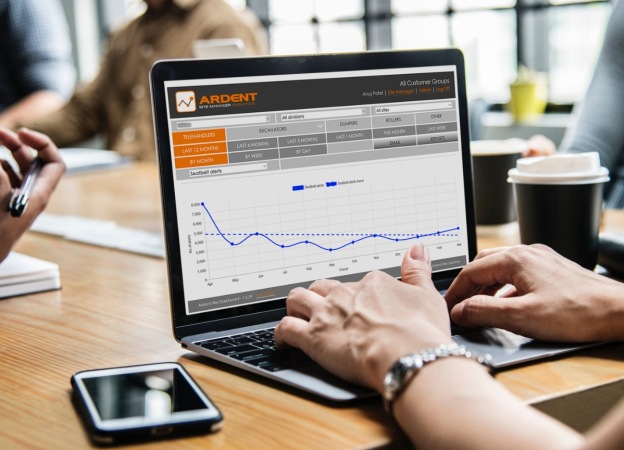
- What it shows: seatbelt and speed compliance, near-miss and proximity events, high-risk manoeuvres.
- Why it matters: behaviour trends predict incidents better than any single event.
- What to do: pick one pattern (e.g. recurring proximity alerts on a corner) and act visibly - relocate materials, adjust the one-way system, or run a two-minute refresher with the affected team.
Report 4: Fuel and carbon
- What it shows: litres by machine or area, CO‚ÇÇe per productive hour.
- Why it matters: it ties operational decisions to outcomes you must report.
- What to do: set a one-week goal - focus on idling on the busiest machines - and one waste fix, such as removing one under-utilised machine from site.
Report 5: Uptime and service
- What it shows: open defects, SLA performance, first-time fixes, and recurring alerts.
- Why it matters: tiny issues compound into lost days if they linger.
- What to do: clear the top three blockers by lunchtime Monday: assign ownership, confirm parts on route, and book the window when the machine is naturally free.
Your ten-minute Monday routine
- Open all five reports; don't dive into sub-tabs.
- For each, write one sentence: the issue, the fix, the owner.
- Share a single page or screenshot in the morning briefing.
- Midweek, spend five minutes checking only the actions you set.
- On Friday, capture one learning to carry into next week.
How it changes the week
Workflows become calmer because decisions are made early. Operators see that reviews lead to small, sensible changes - not lectures. Supervisors spend less time firefighting and more time sequencing work. Machines are either busy or gone, not parked "just in case." Fuel bills and incident rates edge down without heavy campaigns.
What to avoid
- Too many alerts. If you won't act on it, turn it off.
- Vanity metrics. If it doesn't change a decision, drop it.
- Monthly marathons. Ten minutes a week beats a two-hour review that never happens.
The takeaway
Pick the few views that matter, turn them into actions, and repeat. That's how data stops being a chore and starts paying back - safer behaviour, higher utilisation, and fewer surprises in the programme meeting.